
Everything I Wish Every Couple Knew Before Their Engagement Session
After years of running engagement sessions across the New York Tri-State area, I can tell you the sessions that turn out the best almost never come down to luck. They come down to a handful of decisions couples make in the weeks before we even pick up a camera — where we shoot, what you wear, and how you show up mentally to the session. Get those right, and the rest takes care of itself. Get them wrong, and no amount of editing fixes it.
This is the same advice I give every couple who books me, laid out in one place so you can plan ahead.
Why your engagement session matters more than you think
A lot of couples treat their engagement session as an afterthought — a box to check before the wedding. I'd push back on that. This is the one session all year where it's just the two of you, no guest list, no timeline pressure, no family opinions. It's also, practically speaking, your first real photo session together, and it does double duty: save-the-dates, a guest book, a slideshow at the reception, and — just as important — a low-stakes chance for us to work together before your wedding day, so you already know how to move, where to look, and what it feels like to be photographed by me. Couples who've done an engagement session are almost always more relaxed in front of the camera on their wedding day. That alone makes it worth doing well.
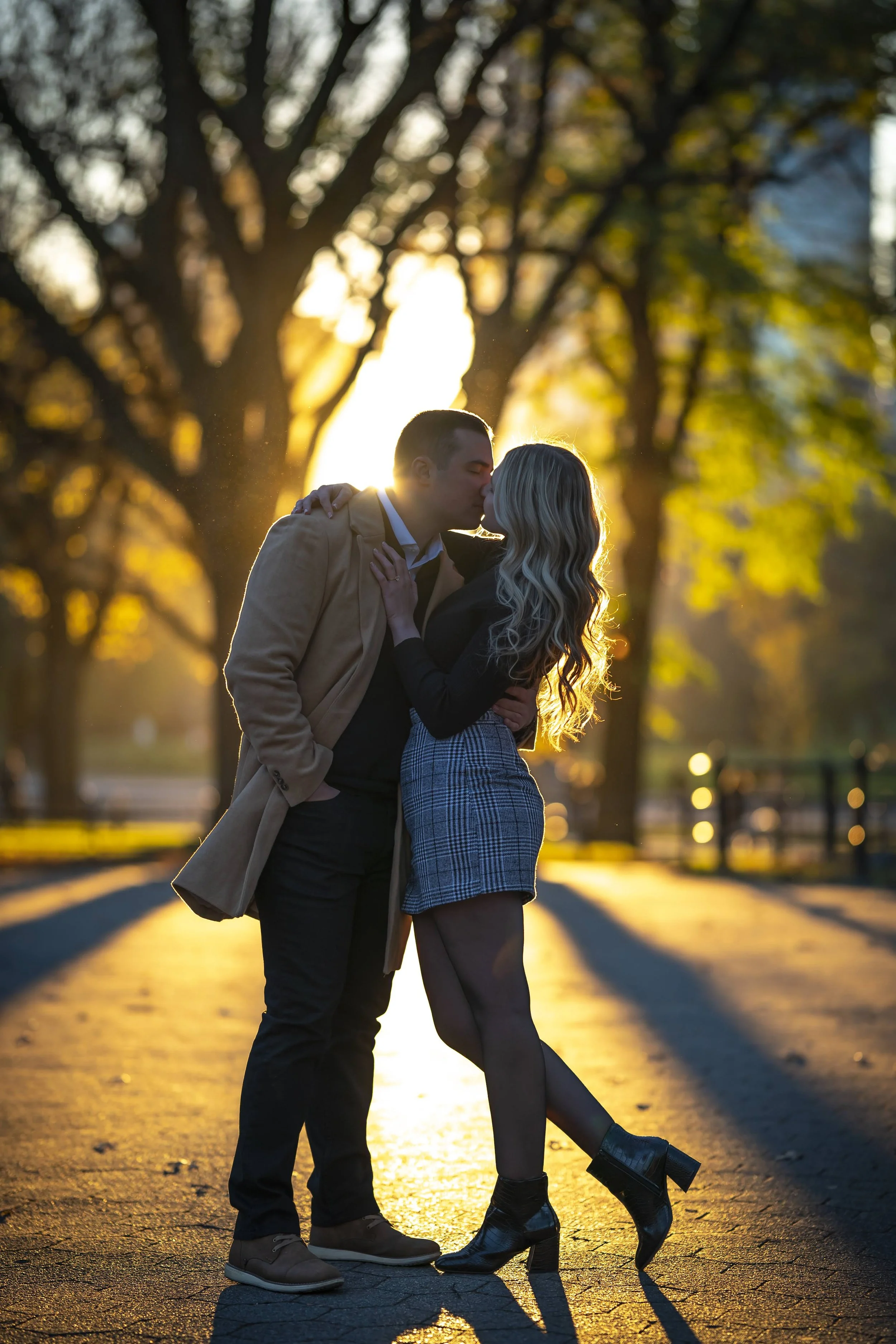
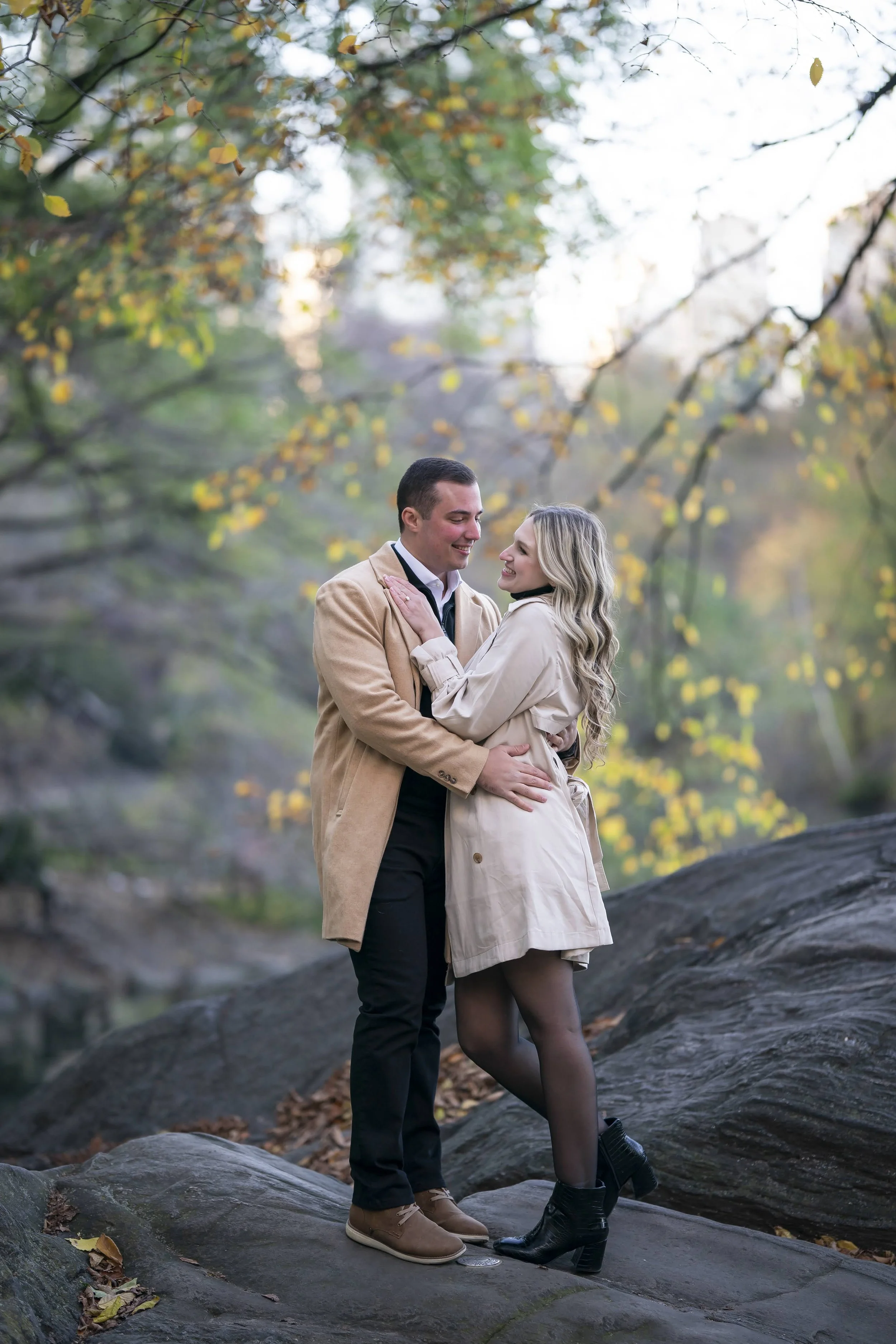
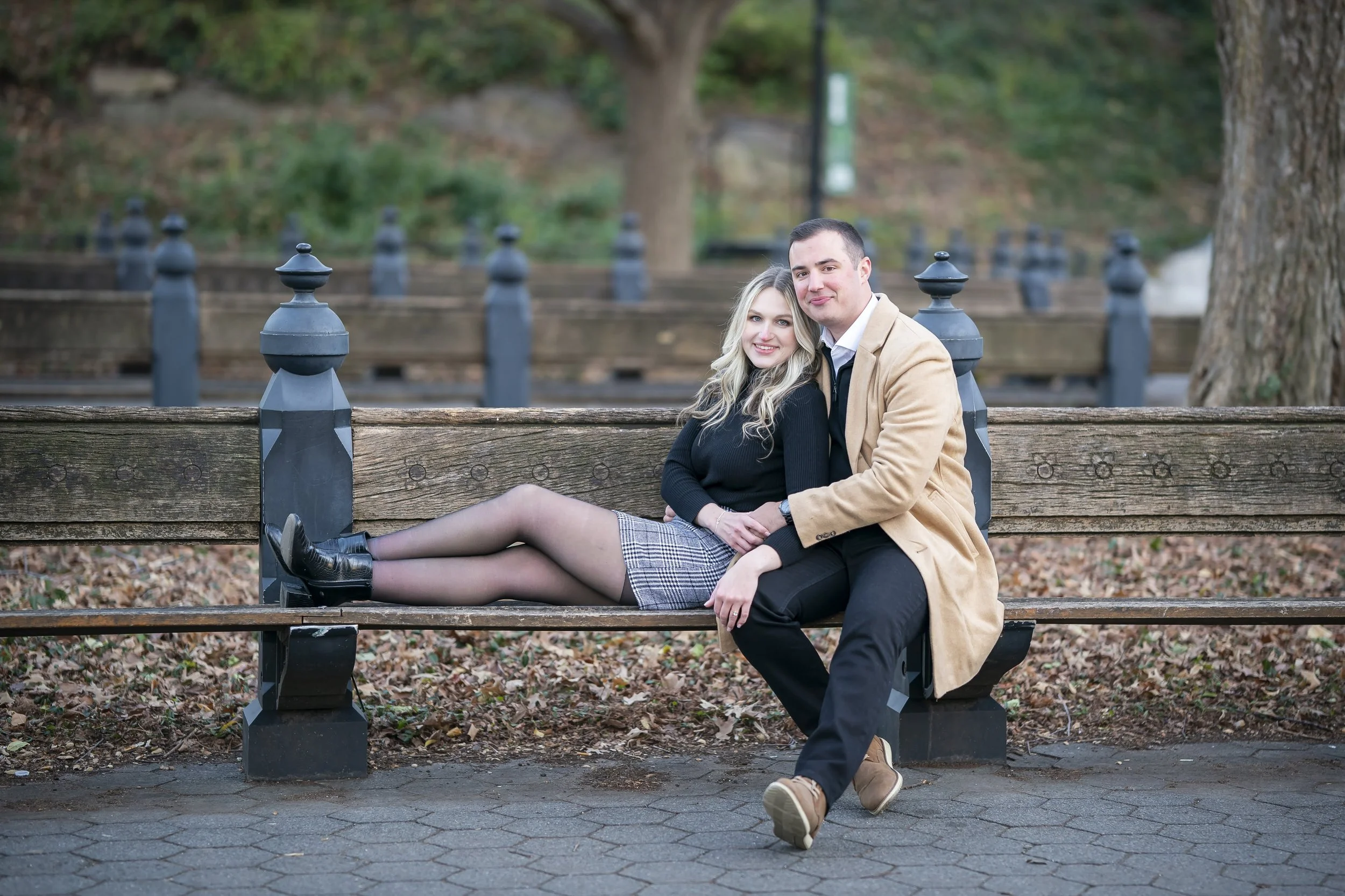
Choosing your location: what actually matters
This is where I see couples overthink the wrong things and underthink the right ones. A few principles I come back to every time:
Pick a place that means something, not just a place that photographs well. The most beautiful location in the world falls flat if it doesn't feel like you. The bookstore where you had your first date, the park you walk your dog in every morning, the neighborhood you're getting married in — these produce better photos than a generic "pretty" spot because you relax into a place you actually know.
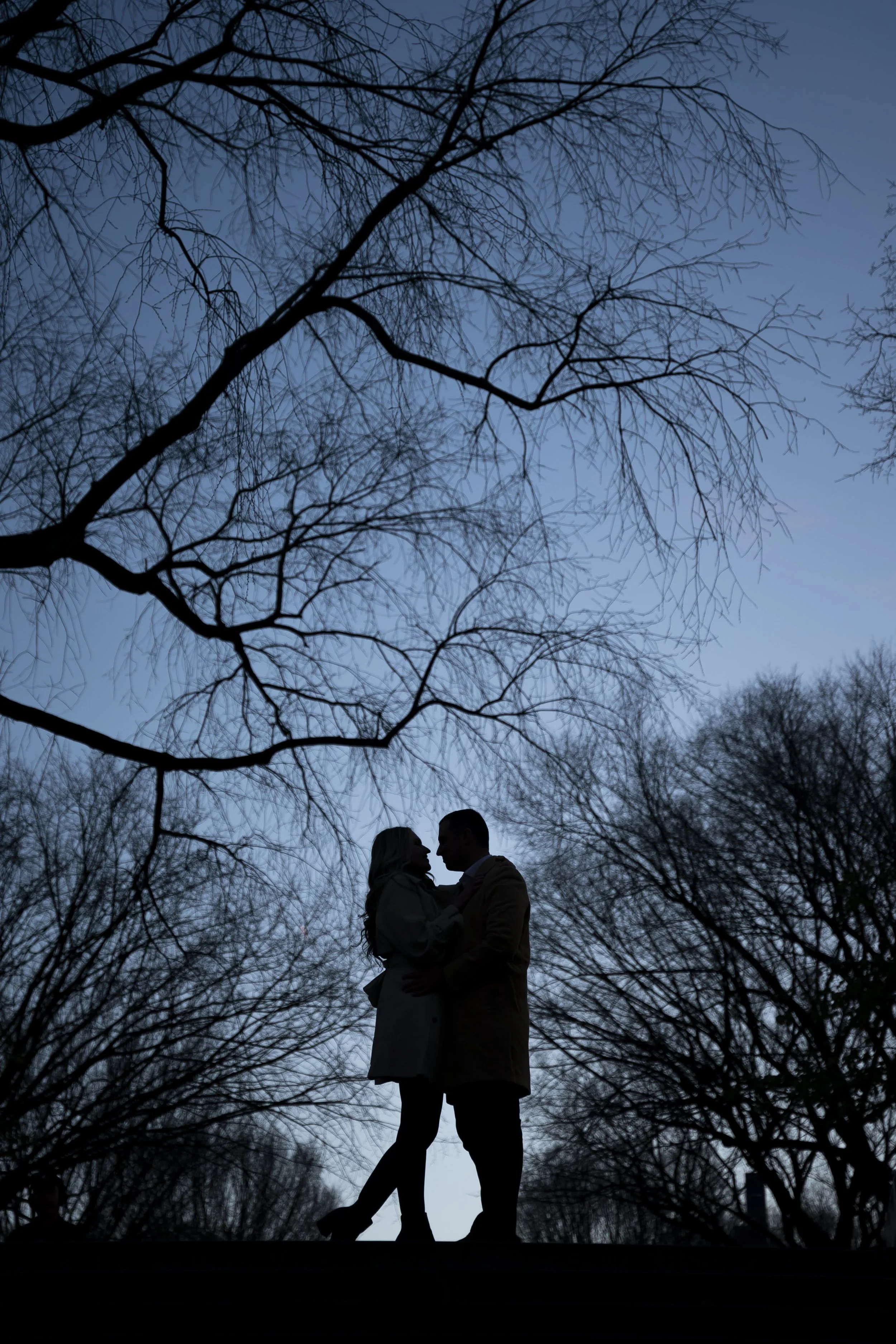
Think about light before you think about scenery. A location with open shade, soft directional light, or a good golden-hour window will consistently outperform a more dramatic-looking spot with harsh midday sun. I'll always help you figure out timing for a location, but if you're choosing on your own, favor places with tree cover, west-facing streets, or wide-open sky over tight urban canyons that trap harsh light at odd angles.
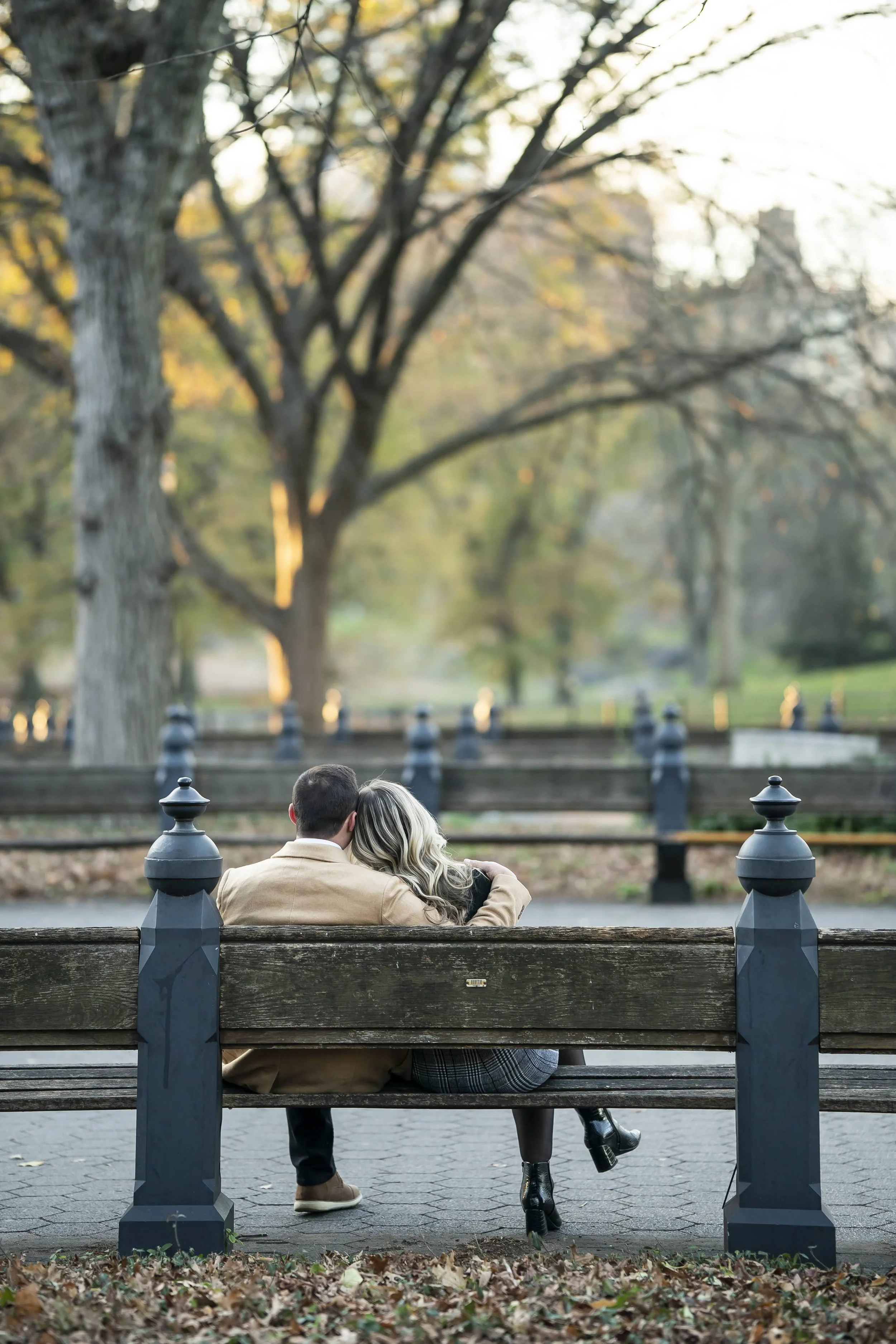
Consider the season and the crowd. A stunning botanical garden is a very different experience in June (packed, hot, competing for backdrops) than in October (golden, quiet, dramatic). If you're set on a popular spot, ask about permits, peak hours, and whether we can get an early or late slot to avoid the crowds.
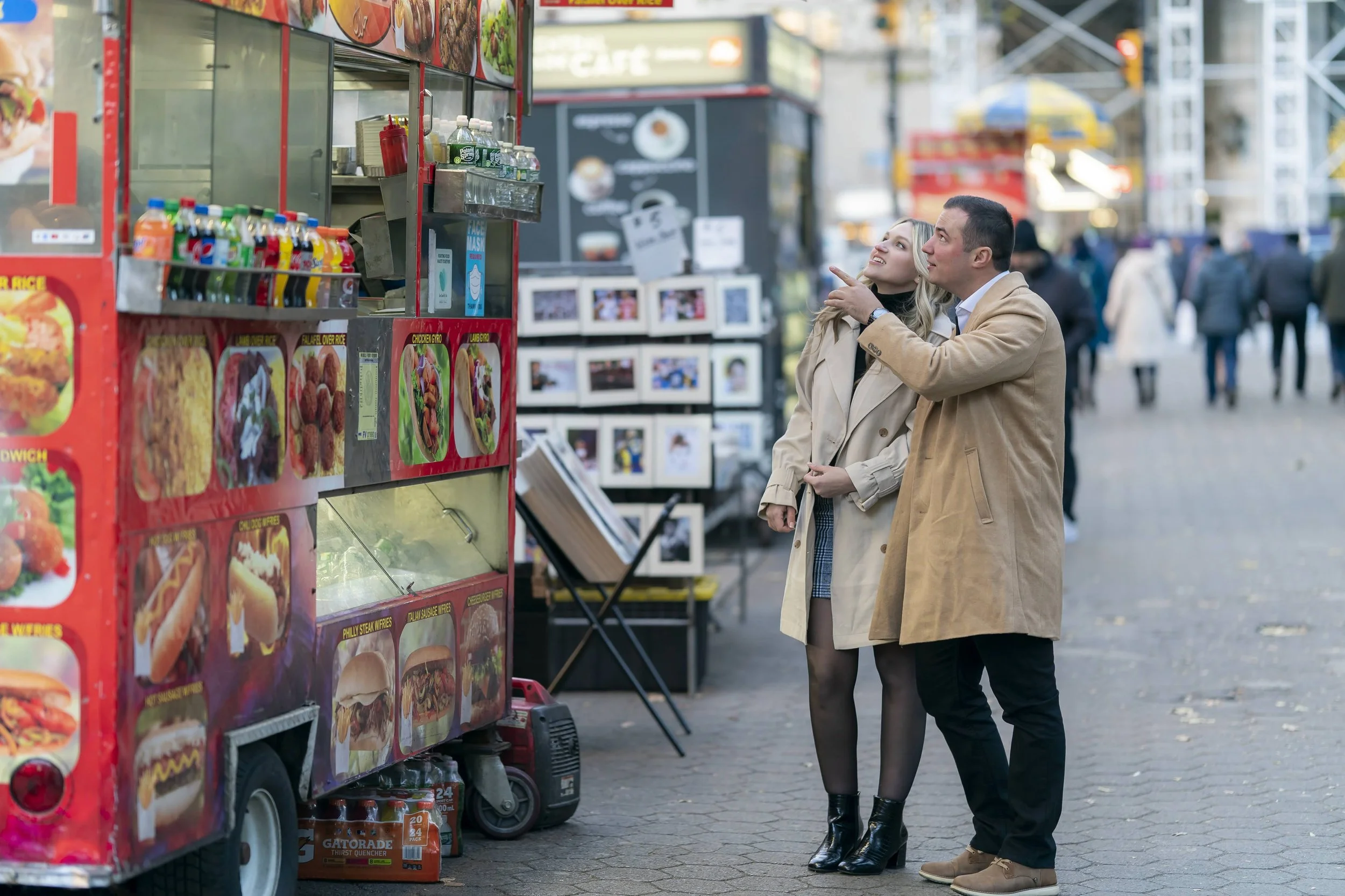
Two locations beat one, but three is usually too many. A city block plus a nearby park, or your favorite restaurant plus the waterfront a few minutes away, gives us range — different textures, different moods — without burning the whole session in transit. Every additional location eats into shooting time, so I generally recommend keeping it simple.
Don't rule out home. Some of my favorite engagement sessions have happened in a couple's actual apartment — making coffee, reading on the couch, being genuinely themselves in a space that's theirs. It's not for everyone, but it's worth considering if "posed in public" makes you anxious.
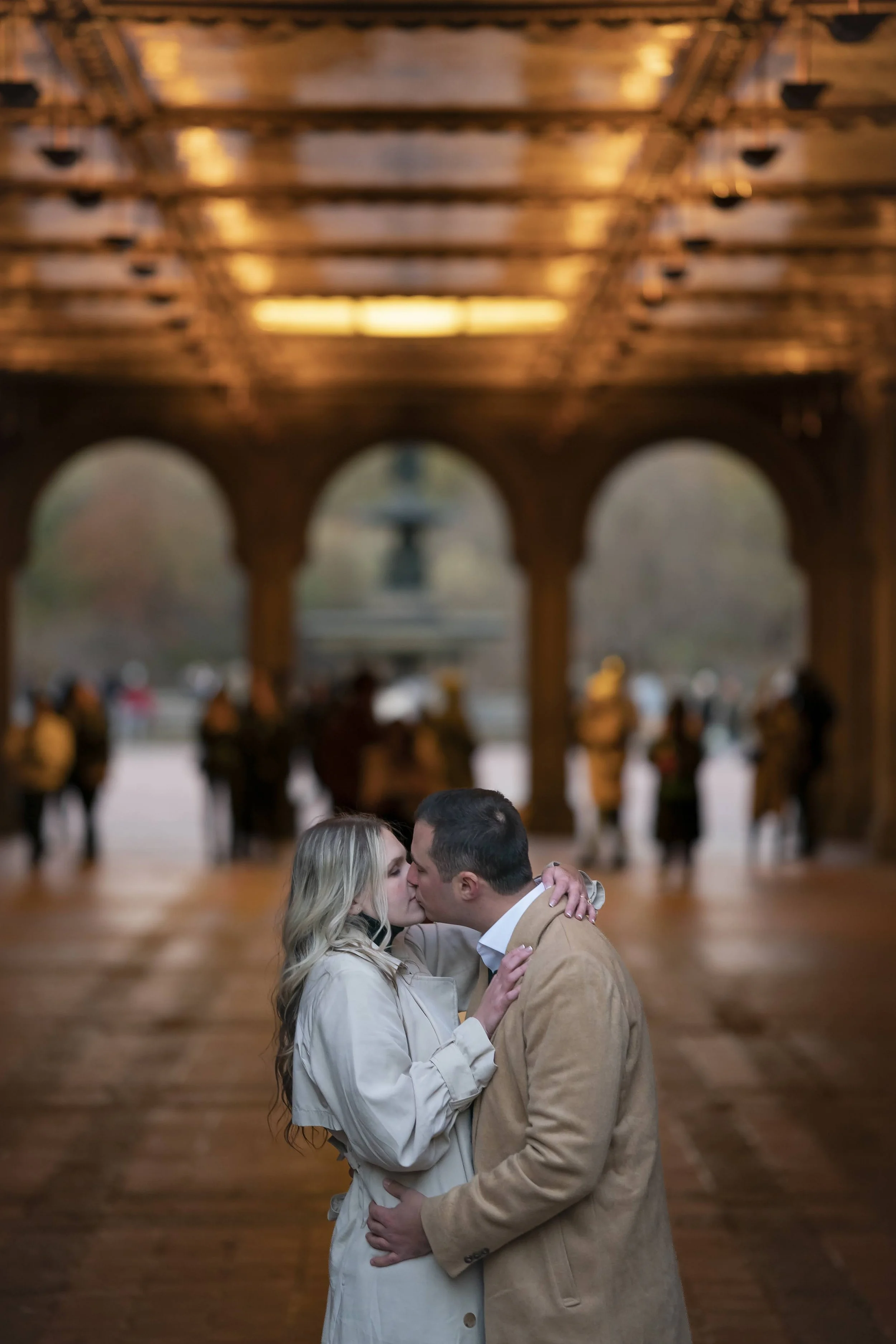
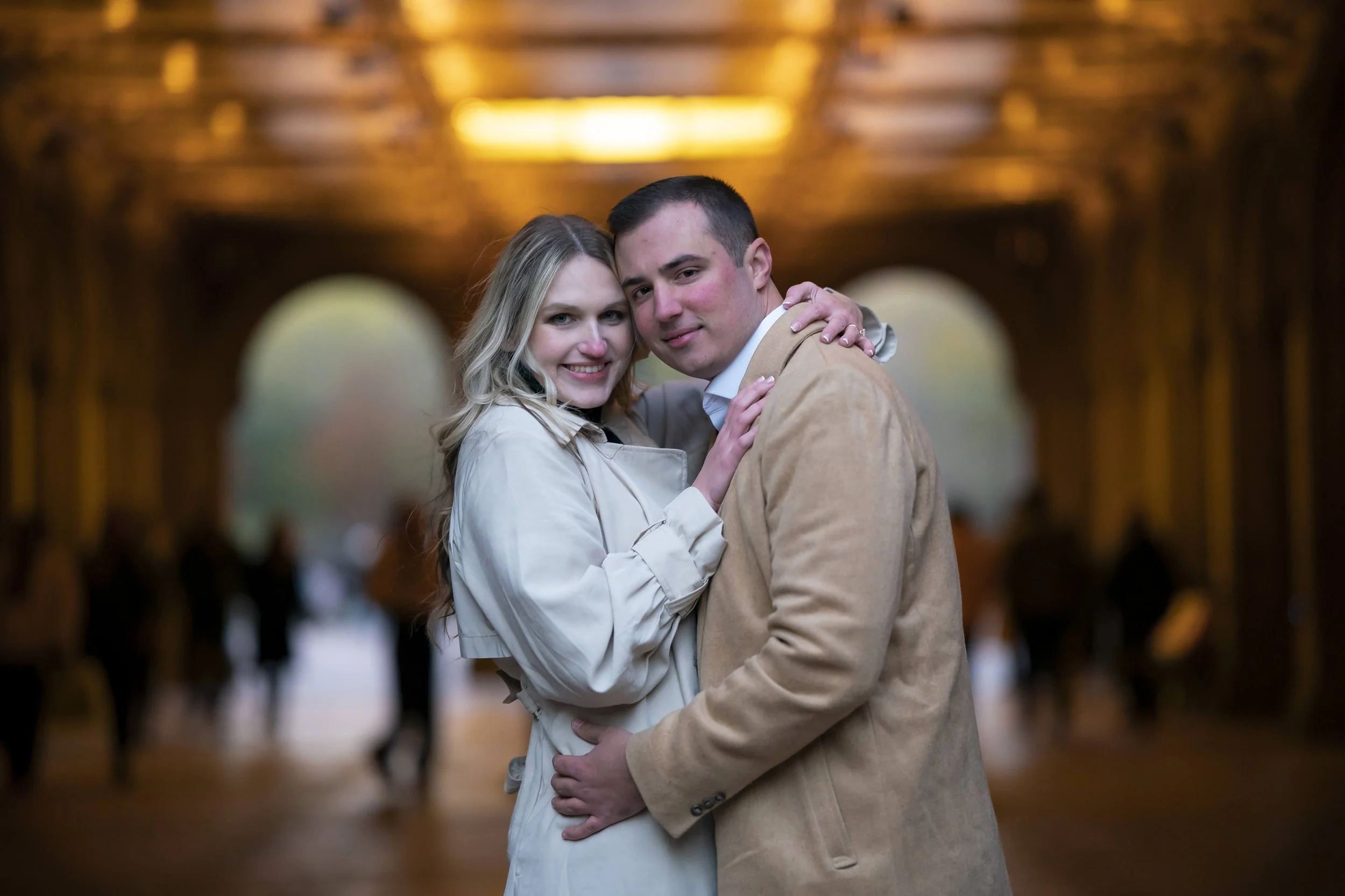
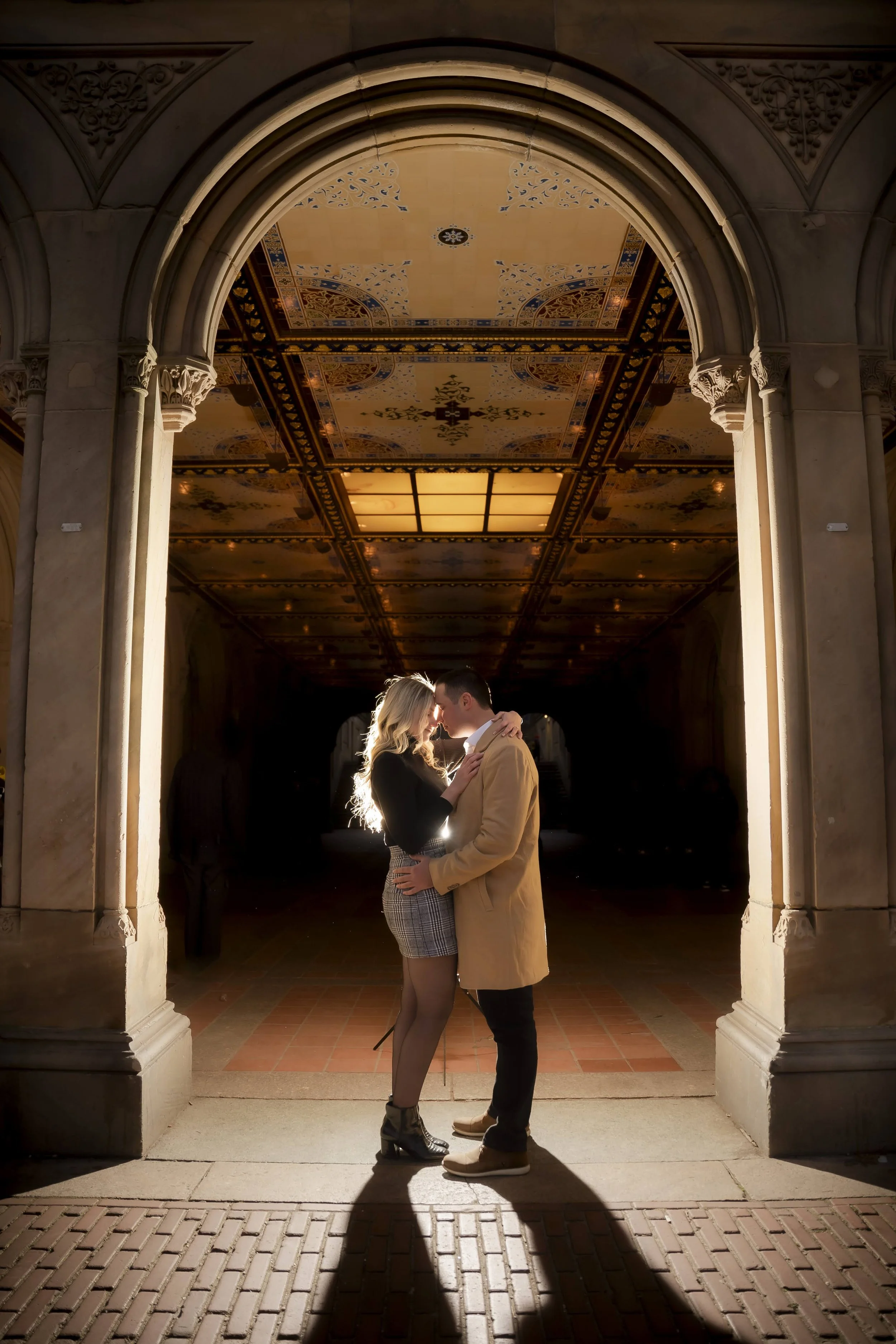
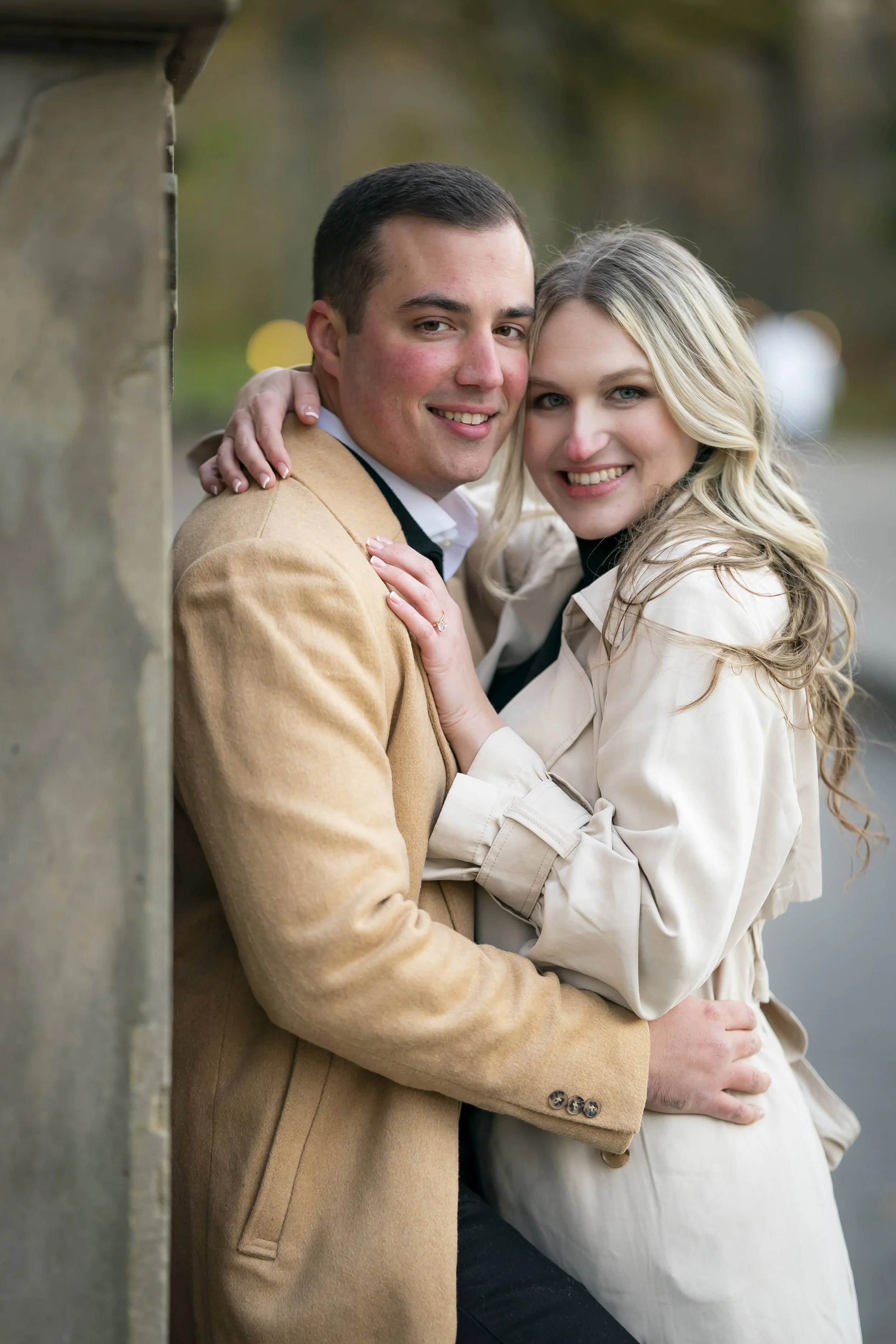
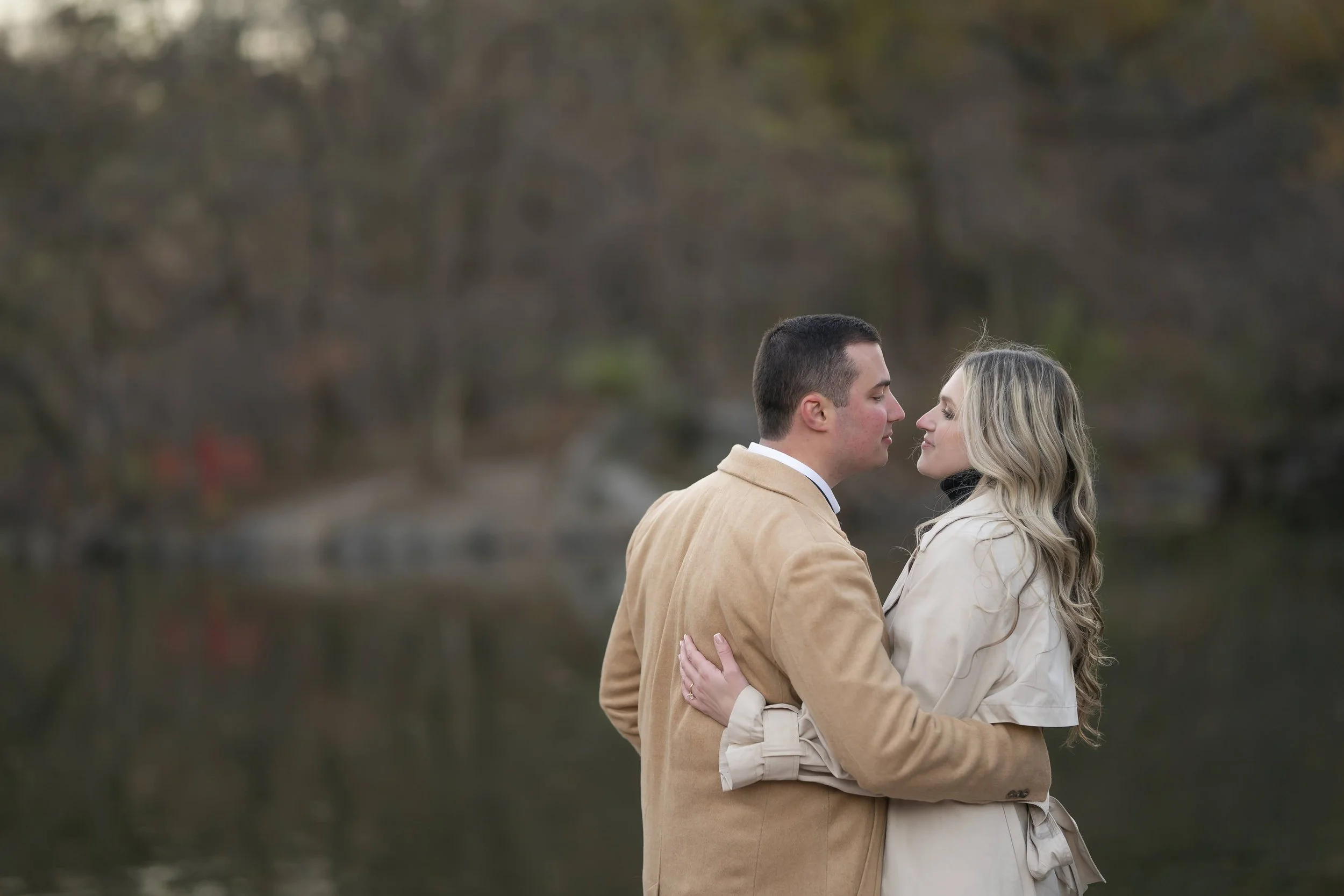
What to wear: the advice that actually holds up
I've watched a lot of outfits succeed and fail in front of the camera, and it almost never comes down to trends. It comes down to a few practical rules:
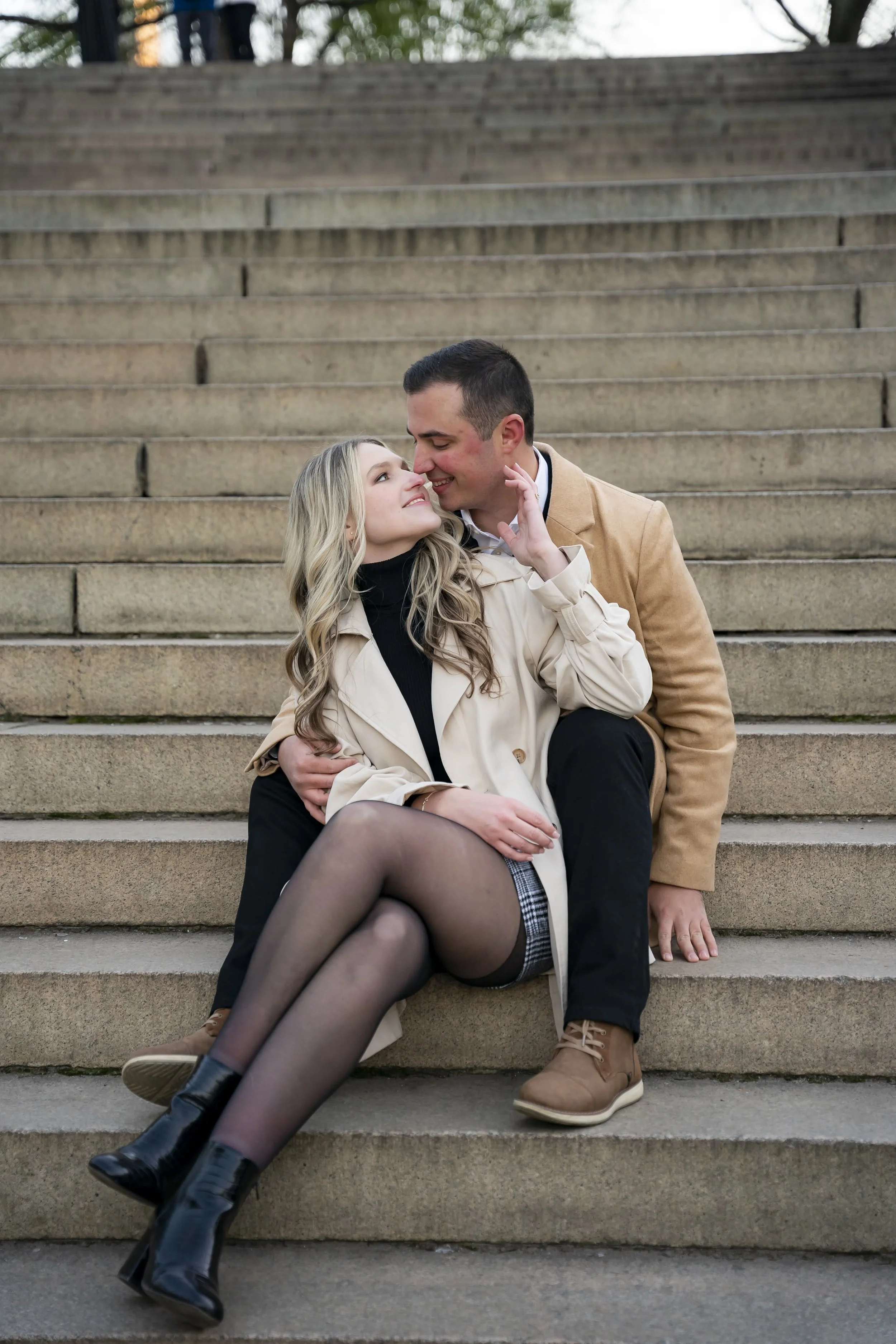
Coordinate, don't match. You don't need matching outfits — you need a shared color palette. Pick two or three complementary tones (say, a soft neutral, a deep jewel tone, and a muted accent) and build both outfits from there. Matching head-to-toe tends to look staged; coordinating looks intentional.
Solid colors and soft textures photograph better than busy patterns. Large logos, loud graphic prints, and small tight patterns (think herringbone or fine plaid) can create visual noise or even a moiré effect in photos. Save the statement pattern for a small accessory instead of the whole outfit.
Dress one notch nicer than the location, not the other way around. If we're shooting somewhere casual, lean slightly elevated — a linen button-down instead of a t-shirt, a sundress instead of gym shorts. It reads as effortless rather than sloppy, and it ages better in photos you'll look back on for decades.
Bring a second outfit if you want variety, but don't overdo it. One outfit change, ideally with a different formality or color story, is usually enough for a one-to-two-hour session. More than that and we spend more time changing than shooting.
Comfort is non-negotiable. If your shoes hurt after twenty minutes, it will show on your face. Break in new shoes beforehand, or bring a comfortable pair to walk in and switch for photos.
Skip the trends that date quickly. Ultra-specific trendy pieces can make timeless photos feel dated within a couple of years. Classic silhouettes and quality fabrics hold up far better over time — which matters, because these are photos you'll display in your home for a long time.
The mistakes I see couples make most often
After this many sessions, the same handful of mistakes come up again and again. Avoid these and you're most of the way to a great session:
Treating it like a photoshoot instead of time together. The couples who get the best, most natural images are the ones who stop performing for the camera about fifteen minutes in and just start being with each other. If you're stiff and self-conscious the whole time, it shows. Trust your photographer to guide you, and let yourself actually enjoy the hour.
Scheduling it at the wrong time of day. Midday sun is unflattering and hard to work with almost anywhere. The single most common fixable mistake is booking a session at 1 p.m. because it was convenient, instead of building it around golden hour or soft morning light. Always defer to your photographer's recommended time window.
Overplanning every single pose and moment. A session with zero structure can feel awkward, but one that's over-choreographed feels stiff and looks it. The best sessions have a loose plan — a few locations, a rough shot list if you want one — with plenty of room for genuine, unscripted moments in between.
Ignoring the weather forecast until the last minute. Check it days out, not hours out, so there's time to reschedule if needed rather than gritting your teeth through a downpour or brutal heat.
Choosing a location for Instagram instead of for you. The trendiest backdrop of the moment often isn't the most meaningful — and it's frequently overrun with other couples doing the exact same shoot. Sentimental beats trendy almost every time.
Not communicating with your photographer beforehand. If you're nervous in front of the camera, hate a certain angle, or have a location in mind, say so ahead of time. I can't work around something I don't know about. A quick planning call or email beforehand solves more problems than anything I can do on the day itself.
Forgetting the small stuff. Touch-up items — blotting papers, a travel-size hairbrush, lip balm — go a long way over a one-to-two-hour session, especially outdoors. Bring water too, particularly in warmer months.
My honest advice
If I had to boil all of this down: pick a location that means something to you and has good light, dress in a coordinated (not matched) palette of solid colors and comfortable shoes, and show up ready to actually spend time with your partner rather than perform for a camera. Everything else — posing, timing, composition — is my job, and after years of doing this, it's the part I've got covered.
If you're not sure where to start, that's exactly what our planning conversation is for. We'll talk through your style as a couple, a location or two that fits it, and a timeline that gives us the best light — and by the time your wedding day comes around, you'll already know exactly what it's like to be photographed by me.